Category: RestartAmerica

Restart America: An American Manufacturing Initiative.

“How do we go about getting orders from U.S. companies for goods that are now being produced in foreign factories?”

There is no easy answer that that question, however, I earlier suggested a way to start. If our political leadership were to promote the advantages of producing goods at home and demonstrate its feasibility, corporate management could be motivated to investigate their options.

Simply put, the next step would be to reverse the outsourcing process. In my August 6th post I sketched the scenario that has played for more than 25 years. The task at hand is to throw the sourcing engine into reverse.

It needs to begin as a few scattered projects . . . and then more and more, and then everywhere. At first a trickle, then streams and finally rivers of work flowing out of foreign lands; creating an incoming tide of work and jobs for the United States.

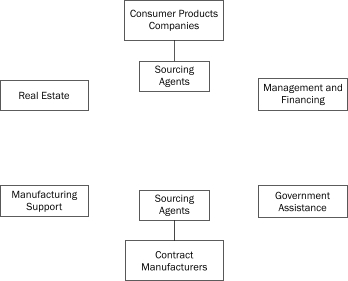
Just as BS, Joe and Richard found foreign factories for their U.S. customers, so, now, must their successors look to U.S.-based contract manufacturers for the way forward. And, where factories sit idle or do not exist at all, the opportunity exists for purpose-built facilities to be paired with their customers.

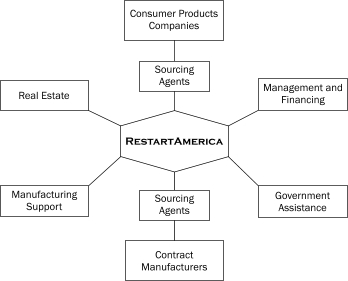
It would be at this juncture that Restart America morphs from an idea into an active participant in the process. At a minimum, a visitor to the Restart America website would gain access to available real estate, university-based manufacturing support programs, government assistance programs, executive and management personnel and contract manufacturing companies: everything needed by consumer products companies and their sourcing agents to relocate work to the United States.

In addition, in its startup phase, Restart America would deploy staff to help match appropriate resources with the needs of consumer products companies. Once the initiative reached a modest degree of momentum, this “matching” function would almost certainly be subsumed by the sourcing agents.

[Post 21 of 21]
Restart America: An American Manufacturing Initiative.

The manufacturing sector is not a “Field of Dreams.” If you build it they may or may not come . . . most likely, not! As I suggested in my August 10th post, “everyone is waiting . . . buildings sit empty, waiting for tenants; manufacturing support and government programs are in place, waiting for applicants; contract manufacturers are waiting for work; and management and capital mark time, waiting for opportunity.”

Would you invest your own money to start up a factory, if you then had to go out and search for orders? If you were a bank loan officer, would you lend money to do so? No, and no!

If, however, you went to that banker with orders in hand and a business plan showing how you would turn those orders into profit, chances are you would get your loan; and be willing to put some of your own money in, to boot.

The billion dollar question is, “How do we go about getting orders from U.S. companies for goods that are now being produced in foreign factories?”

[Post 20 of 21]

Restart America: An American Manufacturing Initiative.

Whatever form Restart America takes, we first need the will to get started.

The desire to bring work back to the United States is surely there, but it lies dormant. We need to wake up the idea and energize the will to do something about it. With Restart America as a rallying point, the President, state governors and big city mayors could each utilize their “bully pulpit” to rally the manufacturing sector and motivate its customers.

“Nothing happens until somebody sells something.”

[Post 19 of 21]

An American Manufacturing Initiative.

The tide is turning on global outsourcing and we have the resources needed to welcome back the work from abroad.

Trouble is, everyone is waiting . . . buildings sit empty, waiting for tenants; manufacturing support and government programs are in place, waiting for applicants; contract manufacturers are waiting for work; and management and capital mark time, waiting for opportunity.

Add to this picture the consumer products companies and their agents struggling with a tarnished and decaying sourcing model, waiting for relief and not knowing what course to pursue.

There needs to be a catalyst that can connect and coordinate these resources. An entity that would show the consumer products companies a way forward. An entity that would marshal resources and map out a U.S.-based manufacturing solution.

[Post 18 of 21]

An American Manufacturing Initiative.

I believe that American manufacturing can successfully compete with foreign-based factories.

From the time in the 1980s that I first visited factories in Pusan, Taipei and Kowloon I was impressed with the fact that old, rundown and crowded buildings could be made to turn out quality products. Their workforce was hard working and capable, and the owners and managers totally dedicated. In one factory I noticed a bedroll under the owner’s desk.

If we are to bring factory work back to the United States we must emulate that early Asian model. Many cities have the right mix of building-stock, labor, transportation, manufacturing know-how and government support to enable motivated business executives and managers to take back manufacturing business from beyond our borders.

Our industrial corridors include many older, rent-depressed buildings that are easily accessible from blue-collar neighborhoods. In addition, transportation service providers provide efficient, low cost means of bringing in raw materials and shipping out finished goods.

We are also home to a population of knowledgeable manufacturing executives and managers with experience encompassing ISO 9000 quality standards and world-class, JIT and lean manufacturing techniques across a wide range of industries. In addition, there are any number of university-based teaching and consulting programs that are focused on the problems facing local area businesses.

Finally, Federal, state and local governments have established an array of programs intended to assist and support the development of our industrial base.

[Post 17 of 21]

What more can we do? A Natural Process.

America’s economic engine is compromised. Forces at work over the last 30 years have sapped our nation’s vitality. What more can we do?

One answer to that question might be: “Nothing” . . . just let nature take its course.

By that I do not mean that tax credits for research, capital improvements, and hiring and training will do much to turn things around. And tax relief for hardship caused by foreign competition merely exacerbates the problem. Rather, it is an acknowledgement that foreign sourcing is not necessarily all that it is cracked up to be.

Say you make the decision to buy product from a factory in the Pacific rim. Maybe you close your U.S. factory or maybe you don’t. The product looks good, the quality is acceptable and the price is right. It’s like driving out of the showroom with a new car, and life is good.

However, just like that new car, your global sourcing arrangement does not stay “new” for very long. Inflationary pressures on product cost are relentless: workers want more money and benefits, worker productivity may be low, rework and reject rates may be high, timeliness of delivery may be erratic, transportation and fuel costs trend higher, inventory investment levels increase, and communication, command and control costs may become a burden.

In addition, if you have a product quality issue that requires a part change, who will eat the cost of the “defective” product in containers on the water, and the defective work-in-process at the factory, and any defective components on order with foreign subcontractors?

Every outgoing tide eventually turns and flows back. The forces that took work and jobs away from the U.S. will one day abate, and the work and jobs will return. Trouble is, this natural process is just too slow. The manufacturing sector needs help to heal itself.

[Post 16 of 21]

What are we doing about it? Tax Credits.

America’s economic engine is compromised. Forces at work over the last 30 years have sapped our nation’s vitality. What are we doing about it?

With the country’s businesses, government and media fixated this last decade and more on profits and the financial sector, efforts on the part of government were of little help in slowing manufacturing’s decline. Whether state-based or Federal, most government action came in the form of growth incentives, or relief for effected companies. Tax credits for research, capital improvements, hiring and training, and tax relief for manufacturers facing foreign competition did little.

Tax credits, well intentioned though they may be, can do nothing for the legions of manufacturers struggling just to stay in business. Without profits tax credits are almost worthless. One could argue, in fact, that government intervention actually enabled the very management behavior that gave force to the flood of global sourcing and work displacement.

[Post 15 of 21]

What did we do about it? Foreign Exchange.

America’s economic engine is compromised. Forces at work over the last 30 years have sapped our nation’s vitality. What did we do about it?

Through the 1980s and into the 1990s, economists spoke mostly about our international trade balance and the strength of the Dollar. The conventional wisdom was that if government would let the value of the Dollar fall, our U.S.-produced goods would be more attractive to foreign buyers and thereby improve our trade balance.

What had worked for much of the twentieth century was, however, no longer working.

By the 1990s, we had entered a period of rampant work displacement. The fact that the holders of foreign currencies had more U.S. purchasing power was of diminishing importance. The goods that they wanted to buy were being produced in a foreign factory.

America’s economic base, its manufacturing sector, continues in steady decline.

[Post 14 of 21]

How did it happen? Management.

America’s economic engine is compromised. Forces at work over the last 30 years have sapped our nation’s vitality. How did it happen?

Who are these managers, so eager to move work, eliminate jobs and close U.S. facilities? They are not the inventors, product designers, engineers and production specialists whose collective efforts built America’s economic base. Nor are they the investors who provided the capital.

It appears that our economy is in the grip of the “Me” generation. Men and women who are conditioned to manipulate the system and navigate their way to positions of influence. Accountants, salesmen and deal makers; very far removed from the factory floor.

Show a profit; short term will do, and move up. Keep the plates spinning, and move up. When something goes wrong, keep your head down, and move up. Keep moving up and up, and don’t look down. Work moved, and jobs and homes lost. Who cares? When the bubble bursts, bail out and hope for a soft landing. And, by today’s standards, that is what is called a job well done!

[Post 13 of 21]

How did it happen? Sourcing Specialists.

America’s economic engine is compromised. Forces at work over the last 30 years have sapped our nation’s vitality. How did it happen?

The frenzy of activity to source products from foreign factories gained mass and velocity through the 1990s and into the 2000s. First no-tech and low-tech products, then services, and finally high-tech products and services. The practice of outsourcing gained respectability and attracted legions of global sourcing specialists.

Today global sourcing is thought of by its practitioners as an “industry” unto itself. There are the International Association of Outsourcing Professionals, the Sourcing Interests Group and the Global Sourcing Council, to name a few of the organizations whose mission is to promote the movement of work from the United States to other countries.

It is an industry that works hard, every day, to take work and jobs out of America’s economic base. And yet, these global sourcing specialists are not solely to blame. They are merely agents of change; complicit with the managers of the clients they serve.

[Post 12 of 21]